6 Steps to Making your Brewery The Most Sustainable in Your Area
Profitability and sustainability can go hand in hand if the right process is in place to prioritize and implement ongoing continuous improvement ideas. With the following process in place, your brewery will continually be more sustainable and better community members. You’ll start to become an icon in the brewery industry and a must visit for sustainability focused beer drinkers. Here are your 6 steps to continually realizing a reduction in your carbon footprint and increase in your profits!
Establish your current state and align on a vision for where you want to go
Develop an extensive list of improvement opportunities, exhaust your available resources
Prioritize ideas and establish a collaborative culture of continuous improvement [key to driving profitable and sustainable solutions]
Build an implementation plan with owners, deadlines and KPIs
Track progress in ongoing initiatives meetings with owner reporting to team
Create multi year improvement pipeline and repeat steps 1-5 every 3-6 months
Small incremental changes add up, 1% here and 2 % there have a compounding impact while building buy-in from your team by showing them that you are open to new ways of working and driving efficiencies.
Step 1: Establish your current state and align on a vision for where you want to go
This is incredibly important yet often overlooked and undervalued. Define your current state by taking a long and hard look at your business. A few examples of key metrics to develop your baseline with are % profit margin, $ / BBL, your carbon footprint, and kWh / BBL. This will provide you with a snapshot of your existing operations and a reference point.
What is your brewery's vision and is there an aspect of sustainability incorporated into it? If you already have this and are hitting goals associated with your vision, this is a great time to take the next step. As a team, start brainstorming what off the wall, out of this world goals do you want to hit. Start talking about what it would look like to hit those goals and align on a vision of the future that incorporates them.
Developing SMART goals will help define and align on where you want to go. These can be developed through a collaborative and iterative approach with all staff. Make high level Specific, Measurable, Attainable, Realistic, and Time bound goals based on your current state and redefine them as ideas are prioritized.
Step 2: Develop an extensive list of improvement opportunities, exhaust your available resources
Establish a template for you and your staff to generate and evaluate improvement ideas. All ideas should be given the same attention regardless of who came up with them, having a template and standardized approach here will help with that. Have printouts or a whiteboard with sticky notes setup for quickly jotting down ideas.
There are many resources available to you on how to reduce your carbon footprint and operational costs, don’t be afraid to ask. Local utilities often have free energy audits available, the Brewers Association has detailed manuals available to reduce energy and water consumption, and, best of all, your staff will have millions of ideas (they just need the platform to openly generate and prioritize them). Ideas should have some initial, high level assessment of its ease of implementation and the impact it would have to help along the prioritization process.
Here our 5 sustainable ideas for you:
Reducing waste in your facility: Have clearly defined recycling, composting and trash bins; placing images of what goes where (both front of house and back); push your vendors to reduce their waste and ensure they are delivering in reusable containers
Reduce your off hour usage: Reduce the amount of energy needed during off hours (HVAC, lighting, refrigeration)
Capture rainwater to water plants (not to mention more plants improves air quality around your facility!)
Dry out your spent grain and reuse for dog treats, baked goods, or maybe even pellets for grills
Develop a “leak” finding procedure; target CO2, compressed air, and water (leaky toilet or faucet).
Step 3: Prioritize ideas and establish a collaborative culture of continuous improvement [key to driving profitable and sustainable solutions]
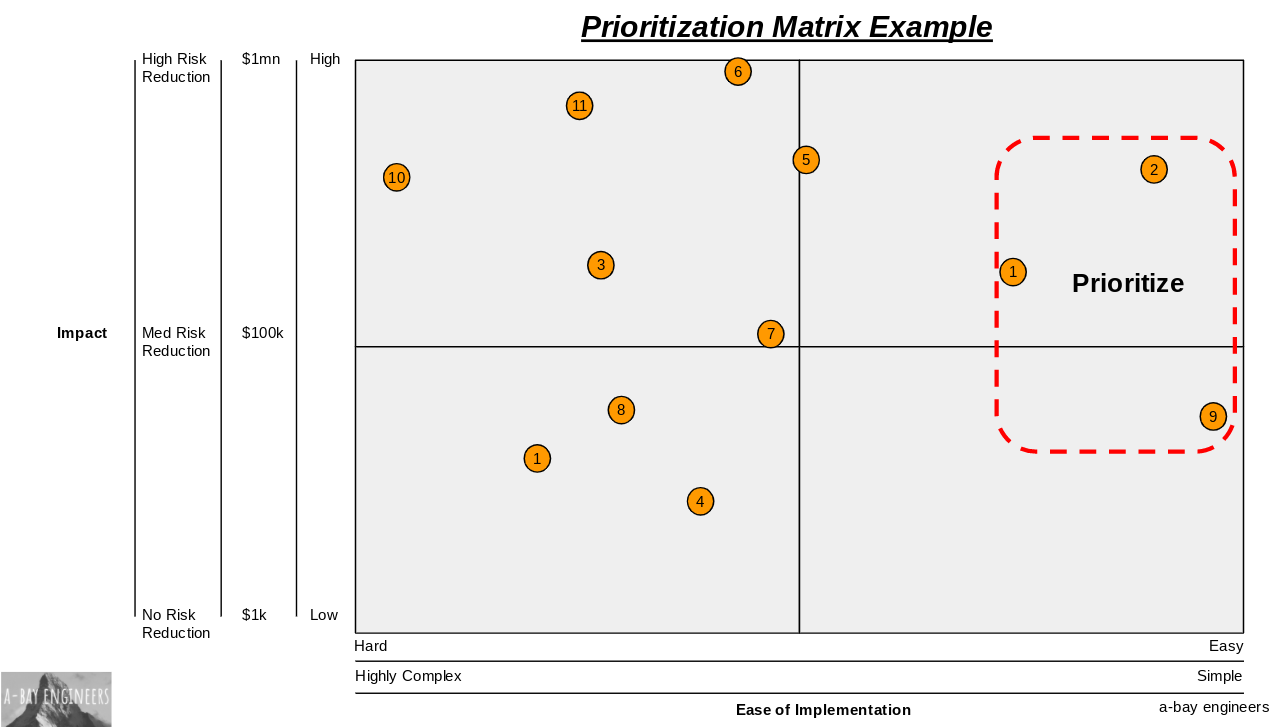
Once a pipeline of ideas has been generated, now prioritize them. Develop a clear and easy evaluation criteria, one that puts a value on carbon footprint impacts. We love the ease of implementation vs impact matrix approach, it establishes what easy to implement means and what high vs low impact looks like, helping align all parties. For example, will this idea take days to implement vs months, is this idea going to reduce our carbon footprint by 1 lb of CO2 vs 1,000,000 lbs of CO2, or save us $1,000 vs $1Million? Collaboratively evaluate each idea based on this criteria and align on where the idea falls in the matrix (each person can place a dot or mark where they believe the idea falls, then as a group collaboratively come to a final vote for each). Once all the ideas have been evaluated, prioritize 2-3 initiatives that will provide high impact while being relatively easy to implement. Easier to implement ideas should take priority to help gain traction in the process. See below for an example of a prioritization matrix.
Best practices around prioritizing ideas through a workshop:
Prior to workshop, provide the following:
Goals of the workshop and what determines success (KPI’s)
Notify the attendees of key information that will be helpful during the workshop, ie. 10,000lbs of CO2 emitted is equivalent to the avg car driven 20,000 miles and 1 kWh of electricity = ~1lb CO2 (0.85 to be exact, but use 1 for ease of calculations as we’re looking for rough estimates)
High level overview of the prioritization process
Develop a consensus on how the group will prioritize the ideas; align on what “high impact” or easy to implement actually are
Go through the prioritization process with a straightforward idea initially, it will help compare the remainder of the ideas against that first one (changing out light bulbs for instance)
Ease of implementation should include the complexity of the idea or amount of time required as well as capital spend
Ask how the entire team how they would see that idea being implemented (get input from all, don’t have one person dominate the discussion)
Utilize a large flip chart for each idea with the idea name and a matrix marked on it, placed on the wall. Provide color dots to each team member and have them individually rate each idea with their dot on the matrix.
Have one team matrix where the final collaborative result will end up. Using numbers for each idea will make this easier. Simply put the idea number on the final matrix, use each idea as a reference point.
Allow 15 minutes for each team member to adequately evaluate each idea.
Have a “just do it” list and use as necessary for ideas that are no-brainers.
For ideas that need to be vetted and further investigated, have a parking lot to come back to.
Step 4: Build an implementation plan with owners, deadlines and KPIs
Assign an owner for each idea and collaboratively develop plans on how the ideas will be implemented. Oftentimes brainstorming what success looks like and working backwards will help. Some actions or steps will be quick and easy whereas others will take a while to complete (assigning owners of each step will help). Making sure the team is aligned as to what that action entails will help create buy-in and transparency. The owners of the actions should be distributed out to the team.
Each idea will have its own set of metrics to track progress. Identify what the key indicator of success is and what other metrics will impact the initiative. Make sure the team has the ability to dive into the details to get to the root cause of any issues or improvements. Assign short and long term targets to the key indicator and establish upper and lower limits for the other metrics. Through rigorous tracking, many improvements are enabled through reducing the risk of non-compliance.
Step 5: Track progress in ongoing implementation meetings with idea owners reporting progress to team
Host weekly implementation meetings to track progress, celebrate successes, and identify issues. The idea owners should take the lead on reporting back progress while the action owners provide insights to the status of their actions, are they on track or are actions in danger of being late. Create an open and trusting culture, ensuring issues are okay to bring forth and allow failure to be part of the process, even a building block to success.
Step 6: Create multi year improvement pipeline and repeat steps 1-5 every 3-6 months
From the ideas generated through this process, create an exhaustive list of ideas and an initial thought of impact vs ease of implementation. Setting some rough estimates on those and timing of potential implementation will enable better planning and budgeting. Share this pipeline with all parties involved and encourage them to continue to develop new opportunities. The process of simply identifying and talking about huge, unreachable ideas or goals will take you closer to reaching them.
Based on the timing of implementing the prioritized initiatives, repeat steps 1-5 as needed, we recommend every 6 months. Once the new way of operating becomes business as usual, the time is right to have another prioritization workshop.
Through this process, engagement and ownership of your brewery's performance should increase while driving down your carbon footprint impacts. Since all the ideas are prioritized based on your specific needs and priorities, impacts could include a profit margin increase of 5%, an electrical consumption reduction of 15%, or a reduced cost of brewing beer by 10%. We at A-Bay Engineers would love to help you through this process, we even guarantee that this process will produce results that will pay for itself.
A-Bay Engineers offers a free initial sustainability workshop right now. Let’s assess where you are and where you want to be regarding your sustainability goals. Book a 90 minute Prioritization Workshop on our Calendy today. We look forward to working with you!